
Everything blends together
Six properties, one profit and loss. The portfolio looks fine in aggregate while two holdings quietly subsidize the rest — and nobody can point to which.

Bookkeeping organized by property and by entity — so a portfolio reads as a set of clear individual stories instead of one blended number, and your next acquisition decision has something solid behind it.
A free 30-minute review of how your properties, entities and closing statements are tracked.
Books by property and entity Closing statements recorded Improvements capitalized, not expensed
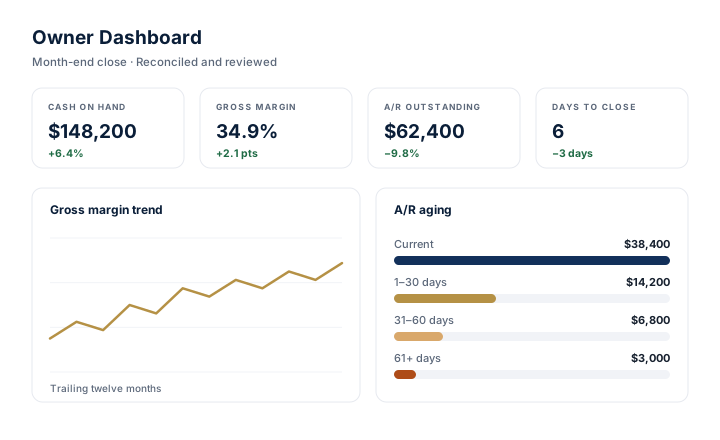
Real estate creates bookkeeping problems a single-entity service business never encounters. These are the ones we see most often.
Six properties, one profit and loss. The portfolio looks fine in aggregate while two holdings quietly subsidize the rest — and nobody can point to which.
An expense for one LLC paid from another’s account, no intercompany entry, and no clean way to produce standalone financials when a lender asks for them.
A purchase posts as one lump payment. Loan costs, prorations, escrow, and the actual cost components never make it into the books as separate items.
A roof replacement is expensed instead of capitalized. The balance sheet understates the asset and your CPA has to unwind it at year end.
For agents and brokerages, splits, referral fees, and desk costs get netted together, so per-transaction profitability is invisible.
A refinance or new acquisition needs current, reconciled statements by entity. Pulling them together turns into a two-week scramble.
A blended profit and loss tells you the portfolio made money. It does not tell you which building paid for the one that did not. We structure the file so every property and every entity stands on its own before anything is consolidated.

Structured for investors holding rentals, agents and brokerages running on commission, and developers carrying projects.
Scope of services: Meridian Ledger Group LLC provides bookkeeping, payroll support, QuickBooks Online services, and financial reporting. We do not provide tax preparation or tax filing, and we do not provide legal, tax, audit, or investment advisory services — including advice on entity structure, 1031 exchanges, depreciation methods, or whether to buy or sell a property. We maintain the records your CPA, attorney, and lender work from.
Every holding on its own line, side by side. Answers: which properties carry the portfolio, and which one you should have sold last year.
What each LLC actually generated and distributed. Answers: which entity can fund the next down payment without borrowing from another.
Assets, accumulated improvements, and debt per property. Answers: what a lender will see before you apply, not after.
Reconciled books, fixed asset detail, and closing statement support in one place. Answers: why tax season stopped being a fire drill.
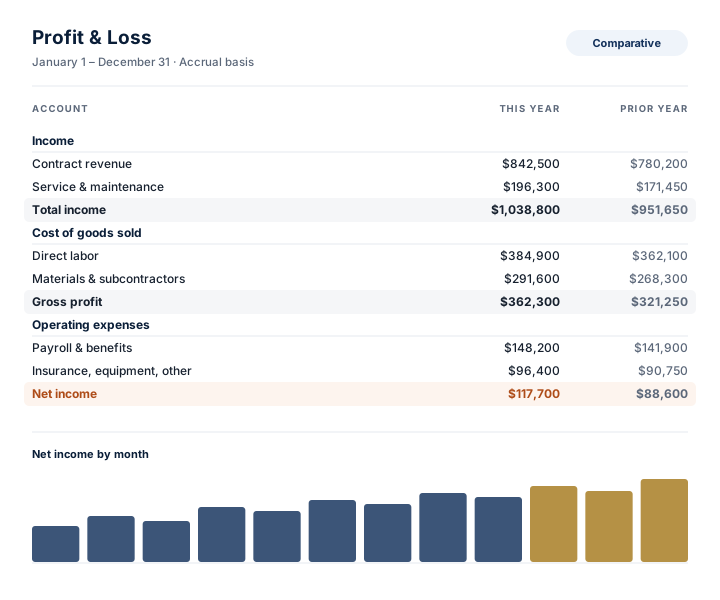

A lender, a partner, or a buyer will ask for the same three things: a profit and loss they can trust, a balance sheet with real asset detail, and support for the numbers. Keeping the file at that standard year-round is far cheaper than assembling it under a deadline.
Behind on entity or property records? See cleanup and catch-up
Thirty minutes with a QuickBooks ProAdvisor Gold, reviewing your entity structure, property tracking, and reporting. No cost, no obligation — and the recommendations are yours to keep.
Mon–Fri, 9:00 AM – 5:00 PM Pacific Virtual, nationwide
Yes. Multi-entity structures are common in real estate. Each entity can be kept as its own QuickBooks Online company, or as classes and locations within one file — depending on how the ownership is structured and what reporting you need.
Yes. QuickBooks Online is configured so income and expenses post to the specific property, which makes per-property profit and loss, cash flow, and comparison across the portfolio possible.
We maintain the underlying records — purchase costs, closing statement detail, capital improvements, and a fixed asset register — along with depreciation entries provided by your CPA. Determining tax basis and depreciation method is a tax matter for your tax professional.
No. We do not provide tax preparation, tax filing, legal, audit, or investment advisory services. We record exchange transactions accurately based on documentation and guidance from your qualified intermediary and tax professional.
Not quite — owner distributions, rent roll reconciliation, and management fee workflows are covered on the property management bookkeeping page.

Job costing, subcontractor payables, and payroll support for crews.
Construction bookkeeping
Rent bookkeeping, owner distributions, and monthly reporting by property.
Property management bookkeeping
A fixed-scope project to bring a behind or disorganized file current.
Cleanup & catch-upReach a real person — no chatbot, no queue.
Monday–Friday, 9:00 AM – 5:00 PM Pacific.
